Technical insight ·
Direct-Supply Storage Water Heaters vs. Boiler-and-Tank Systems
For many commercial hot water projects, a group of storage water heaters placed close to the point of use can replace a central boiler, heat exchanger and storage tank. Here is how the approach works and where it fits.
The conventional approach
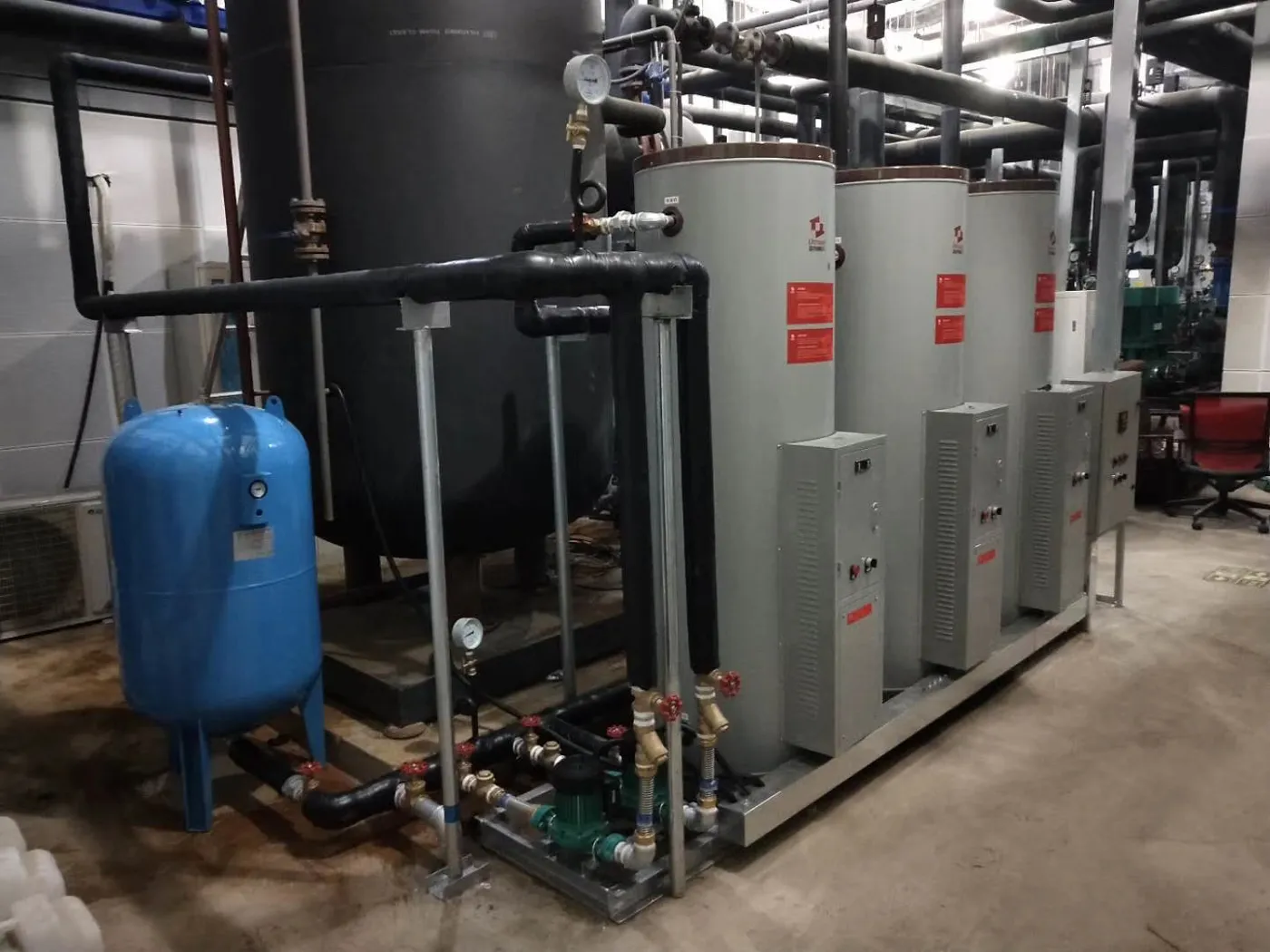
A traditional central system heats water indirectly: a boiler heats a primary circuit, a heat exchanger transfers that heat to domestic water, and a storage tank buffers peak demand. Every extra stage adds circulation heat losses, pump energy and another point where a fault can stop the hot water supply.
How a direct-supply storage water heater works
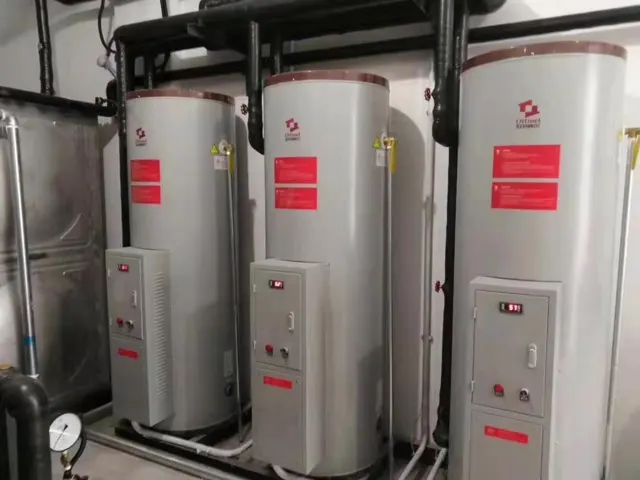
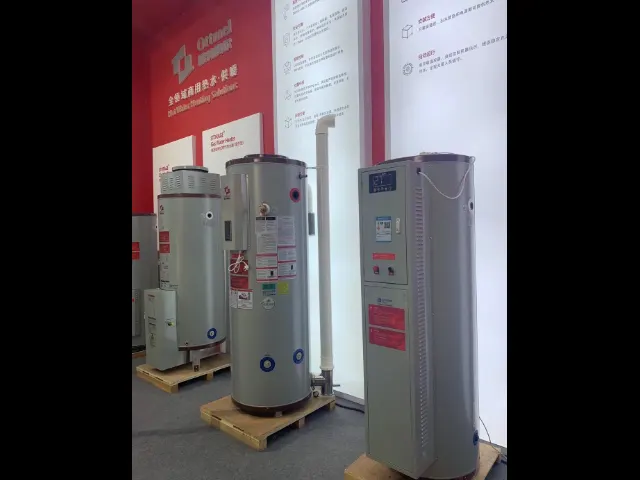
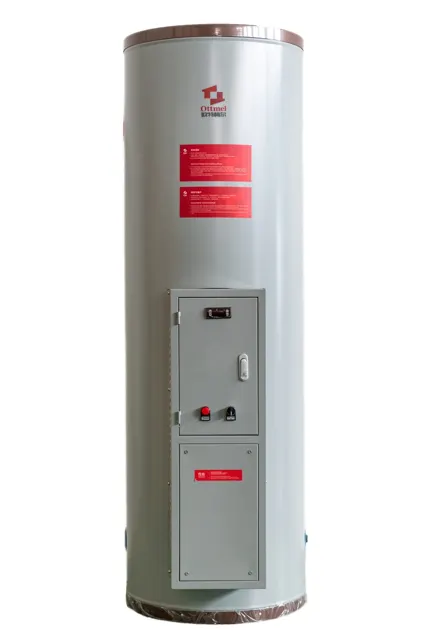
An OTTMEL commercial storage water heater has its own sealed, pressure-rated tank. Flue gas passes through the heat exchanger inside the tank and heats the stored water directly, so no separate heat exchanger or external storage tank is needed. The tank is connected straight to the mains water line and operates at mains pressure, so hot water reaches every outlet that cold water reaches.
The heater works on the displacement principle. Cold water enters at the bottom of the tank at mains pressure and pushes hot water out at the top. Because hot water is less dense, it stays above the cold water, and the outlet dip tube draws from the hottest layer.
Modular, point-to-point layout
- Match capacity to load. Several units are installed in parallel and the number in operation follows actual demand. Units can be switched off during low-demand periods.
- Redundancy. If one unit needs service, the others keep supplying hot water.
- Shorter pipe runs. Units can be placed close to each building or zone, which reduces distribution heat losses and lets each area be served on its own schedule.
- Smaller plant rooms. Outdoor models can be installed on rooftops without a dedicated boiler room.
Typical applications
The approach suits small and mid-sized projects such as hotels, apartments, dormitories, hospitals, restaurants and public bathing facilities. OTTMEL’s Chinese product literature cites projects with a heat demand below about 500 kW as a typical range. Larger loads can also be met by combining more units or by using a boiler-based system; our team can review your load data.
Regulatory note: under Chinese regulations, gas storage water heaters with a rated heat input of up to 100 kW and a water capacity of up to 500 L are classed as water heaters rather than boilers. Classification in your market depends on local codes and should be confirmed during specification.