Technical insight ·
How to Size Commercial Water Heaters for a Hotel: Worked Examples
Sizing hot water plant for a hotel starts with the design hourly heat load. The examples below follow the method used in OTTMEL’s project proposals, based on the Chinese building water supply design code GB 50015.
Step 1: Design hourly heat load
For a hotel with 24-hour hot water supply, the design hourly heat load (Qh) is calculated from:
Qh = Kh × m × qr × (tr − tl) × ρr ÷ T
- m: number of users or beds
- qr: daily hot water allowance per bed (the code gives 80–120 L per bed per day for hotel guests)
- tr, tl: hot and cold water temperatures
- ρr: water density (≈1 kg/L)
- T: hours of supply per day (24)
- Kh: hourly variation factor from the design code
Example 1: 150-room hotel, electric storage water heaters
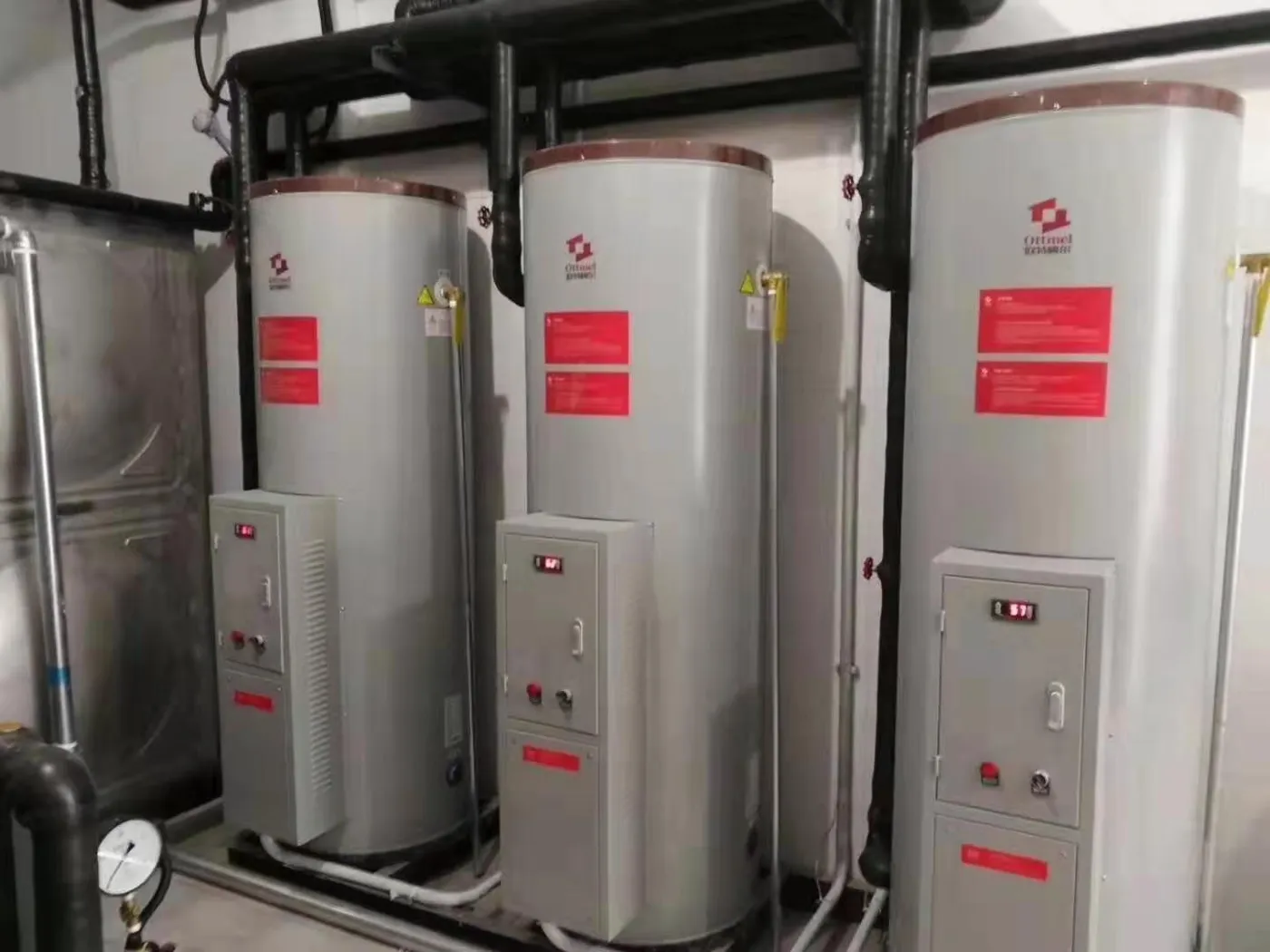
Inputs: 150 rooms, 2 beds each, 120 L per bed per day, hot water at 60 °C and cold water at 4 °C (the winter mains temperature used for Qingdao). With the code’s hourly variation factor, the design hourly heat load works out to 279,720 kcal/h, or about 325 kW.
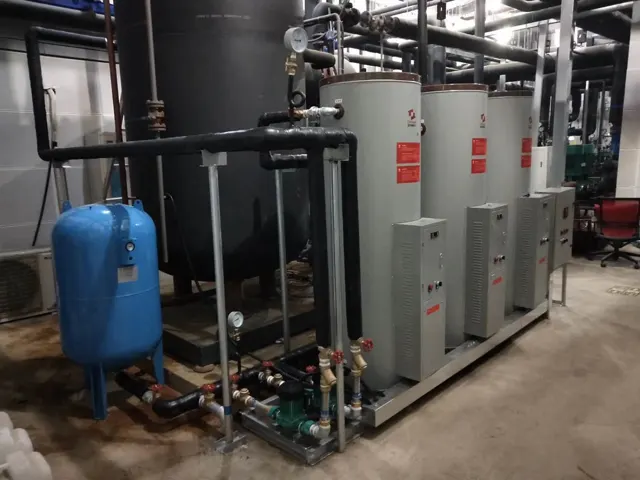
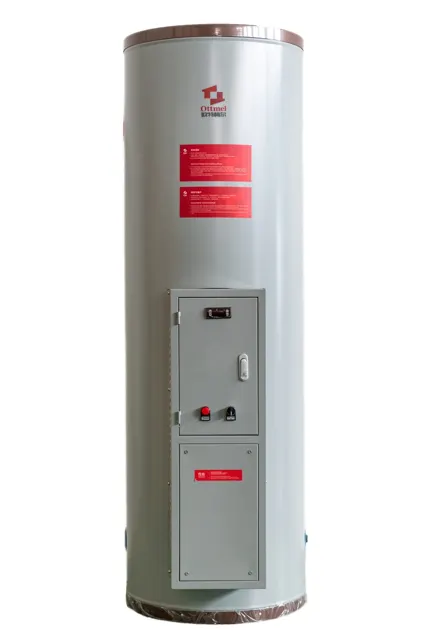
Selection: the OTME495-90 provides 90 kW and 495 L of storage. 325 kW ÷ 90 kW = 3.28, and the proposal specified 3 units, with the stored hot water in each tank helping to cover the peak. Always confirm the peak-period storage check for your own project.
Example 2: gas storage water heaters
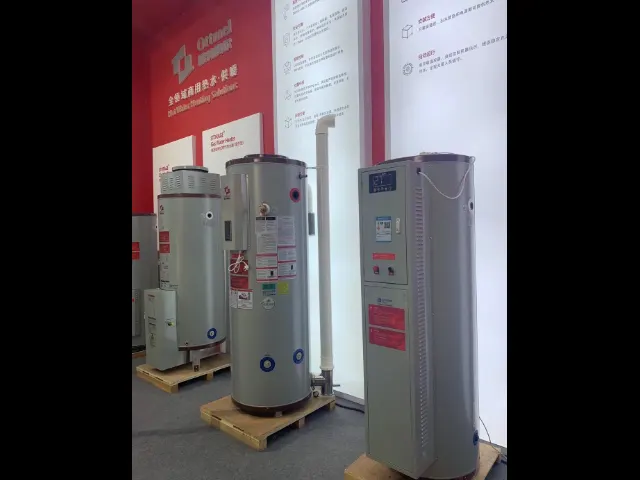
For a project with a design hourly heat load of 492.07 kW, the proposal used 99 kW gas storage water heaters and assumed a thermal efficiency of 80% for sizing:
Number of units = Qh ÷ (Pin × η) = 492.07 ÷ (99 × 0.80) ≈ 6.2, so 7 units were selected. The stored volume (7 × 322 L) and the time needed to reheat it were then checked against the peak period.
Step 2: Check storage and operating strategy
- Make sure the combined storage covers the peak draw period.
- In daily operation, switch off some units when demand is low; this is a key advantage of a modular installation.
- Choose condensing models such as the PRO series where low NOx emissions or high efficiency is required.
Send us your room count, occupancy pattern and local cold water temperature, and our engineers will propose models and quantities for your quotation.